
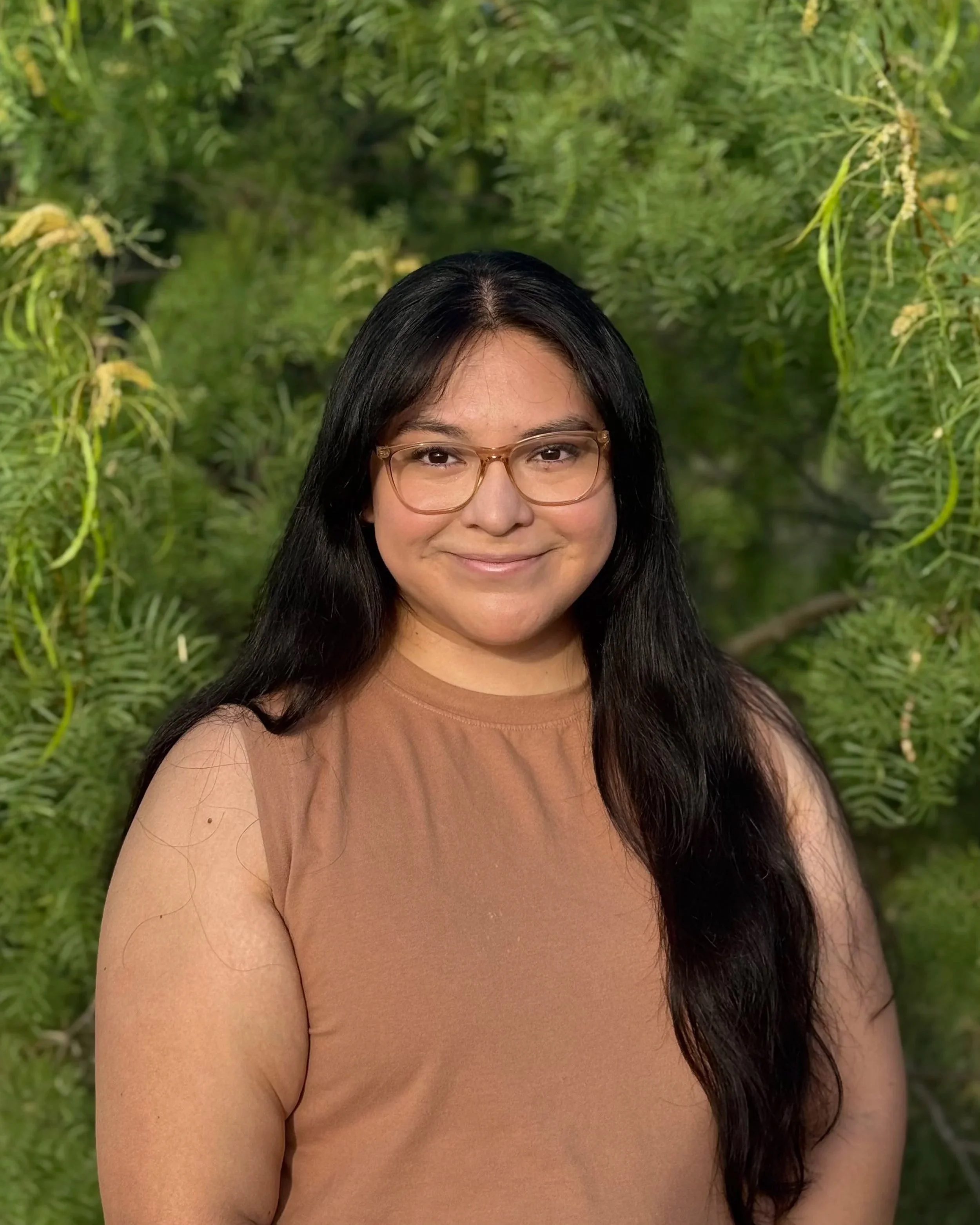
I’m Aimee Pina, M.S., CCC-SLP, the speech-language pathologist behind Forget-Me-Not Speech & Language Services.
I was born and raised on Long Island, NY. I earned my B.S. in Brain & Cognitive Sciences and B.A. in American Sign Language from the University of Rochester, and my M.S. in Speech-Language Pathology from Gallaudet University. I also hold an Advanced Certificate in Bilingual SLP from Teachers College, Columbia University. I am ASHA-certified and licensed as a speech-language pathologist in Texas and Washington.
I currently live in Abilene, TX, where I provide speech-language services through telehealth and select in-person services.
My clinical background includes working with Deaf and hard-of-hearing children, multilingual families, AAC users, students with emotional and behavioral support needs, and people who stutter.
I’m a heritage Spanish-speaker, ASL-fluent clinician, ADHDer, person who stutters, and an Ecuadorian-American. In my free time, I love looking at the sky and listening to unserious podcasts.
Hi, I’m Aimee.
Why “Forget-Me-Not”?
Forget-me-nots have been my favorite flower for as long as I can remember. Whether my favorite color is periwinkle because of forget-me-nots or my favorite flowers are forget-me-nots because they are periwinkle… who’s to say.
As someone who grew up with communication differences, I think I recognized something familiar in them. They are small, gentle wildflowers—sometimes overlooked, yet resilient enough to keep growing in many different conditions.
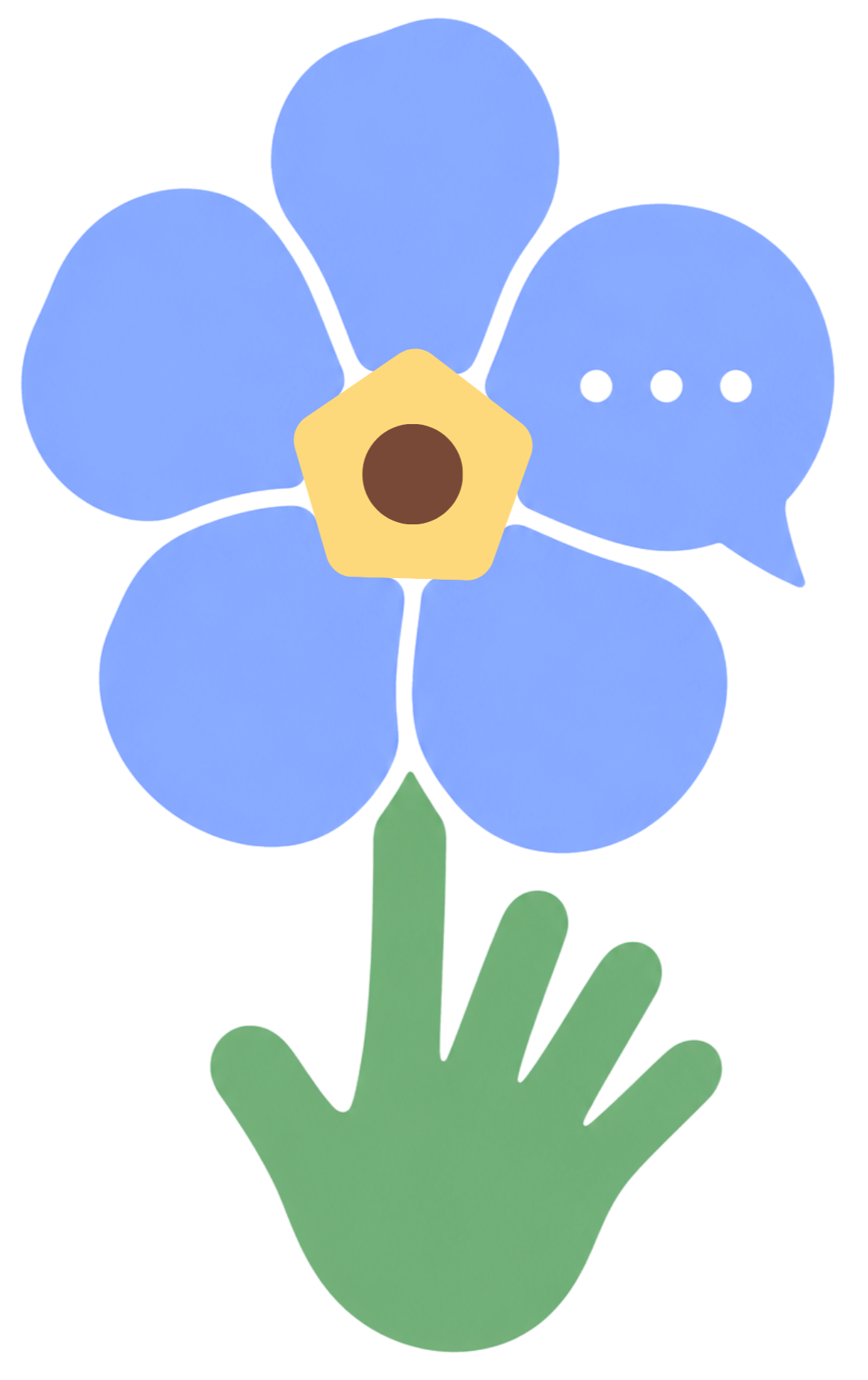
When I designed the logo, I wanted it to carry that same feeling. The flower represents growth. The speech-bubble petal represents communication. The hand forming the stem represents communication beyond spoken words and the support of the people around us.
Together, these pieces reflect what I want Forget-Me-Not to be: a practice where your communication—or your loved one’s—is noticed, respected, and supported without asking you to become someone else.
Forget-Me-Not is my way of creating thoughtful, individualized services that keep the whole person—and the ways they communicate—in mind.
My Approach
Authentic, effective, and sustainable communication
Communication should feel like you, work for you, and be something you can sustain in real life. I think about it through three connected priorities: authenticity, effectiveness, and sustainability.
Authentic communication reflects who you are and how you most comfortably and naturally communicate. This may include speech, sign, gestures, AAC, facial expressions, body language, or a combination of these.
Effective communication helps you express what you mean, make choices, connect with others, participate in everyday life, and advocate for what you need.
Sustainable communication is realistic for your daily life. It may still take effort, but it should account for your energy, sensory, motor, and processing needs without requiring more than you can reasonably maintain.
The balance between these priorities will look different for each person and may change depending on the situation. We will work together to determine what that balance should look like for you or your loved one.
Understanding comes first
Education is central to self-advocacy. Understanding what is happening, why it may be happening, and what options are available can help you make informed choices about your own communication or your loved one’s.
Sometimes treatment involves building skills. Other times, it involves unlearning ideas you may have previously been taught. You may come to new information later than you wish you had. In those moments, I come back to Maya Angelou’s words: “Do the best you can until you know better. Then when you know better, do better.”
Your goals guide the plan
Your care plan should reflect what is important to you or your loved one. We will build goals together based on individual needs, interests, priorities, and the situations that matter in everyday life.
For younger children or people who may not state their goals directly, this also means paying attention to their preferences, responses, strengths, and attempts to communicate—not only what the adults around them want their communication to look like.
The goal is for new knowledge, skills, language, or ways of communicating and thinking to become useful outside of the session.
Honest feedback is part of the support
Being affirming does not mean being passive. I believe in presuming competence, allowing processing time, and looking for the reason behind what we see or hear. I also believe you deserve direct and respectful feedback when something connected to your goals comes up.
Some of the most useful feedback comes from small, automatic patterns that show up during an activity or conversation. When that happens, I will point it out respectfully so we can work with it in the moment. It is a little like telling a friend they have something in their teeth: not to embarrass them, but because leaving it unmentioned would not be helpful.
The heart of it all is this: Speech, language, and communication naturally vary. My role is to bring the knowledge, honest feedback, and individualized support needed to help you or your loved one build communication that feels authentic, works in everyday life, and can be sustained over time.
A Personal Note: My Journey
Parts of my own story shape the way I show up as a clinician.
I was raised by Spanish-speaking immigrants, and Spanish was my first language. Unfortunately, misinformation about bilingualism discouraged my parents from continuing to raise me in Spanish. I have now spent years relearning, reclaiming, and incorporating Spanish back into my life. I know what it feels like for language to be tied to family, identity, confidence, and belonging — and what it feels like to have to find your way back to it.
I am also a covert stutterer. Growing up, I did not know other people who stuttered, but I did know enough about how stuttering was viewed to try to hide it. At 24, I joined my first stuttering community group. Being around people who looked and sounded like me helped me realize how much energy I had spent chasing fluency at all costs, instead of making room for acceptance, choice, and stuttering as a naturally occurring variation of speech.
I was diagnosed with ADHD at 26. That gave me language for things I had lived with for a long time, especially around attention, processing, overwhelm, energy, affect, and being misunderstood from the outside.
My clinical work with Deaf and hard-of-hearing clients, AAC users, and minimally speaking clients has made me think a lot about access, patience, and how much communication gets missed when people are expected to respond in one specific way.
The more I learned to support other people’s communication, the more I started to understand my own. That has changed the way I listen, the questions I ask, and the care I take with each person’s communication.

Working Together
I like questions. I like understanding the “why.”
If my background sounds like a good match for what you are looking for, we can start with a free consultation.